
San Diego’s Historic Gaslamp: Stories Behind the Streets
Look beyond the nightlife to spot Victorian-era details, old downtown stories, and the layers that give the Gaslamp its character.
6/7/2026
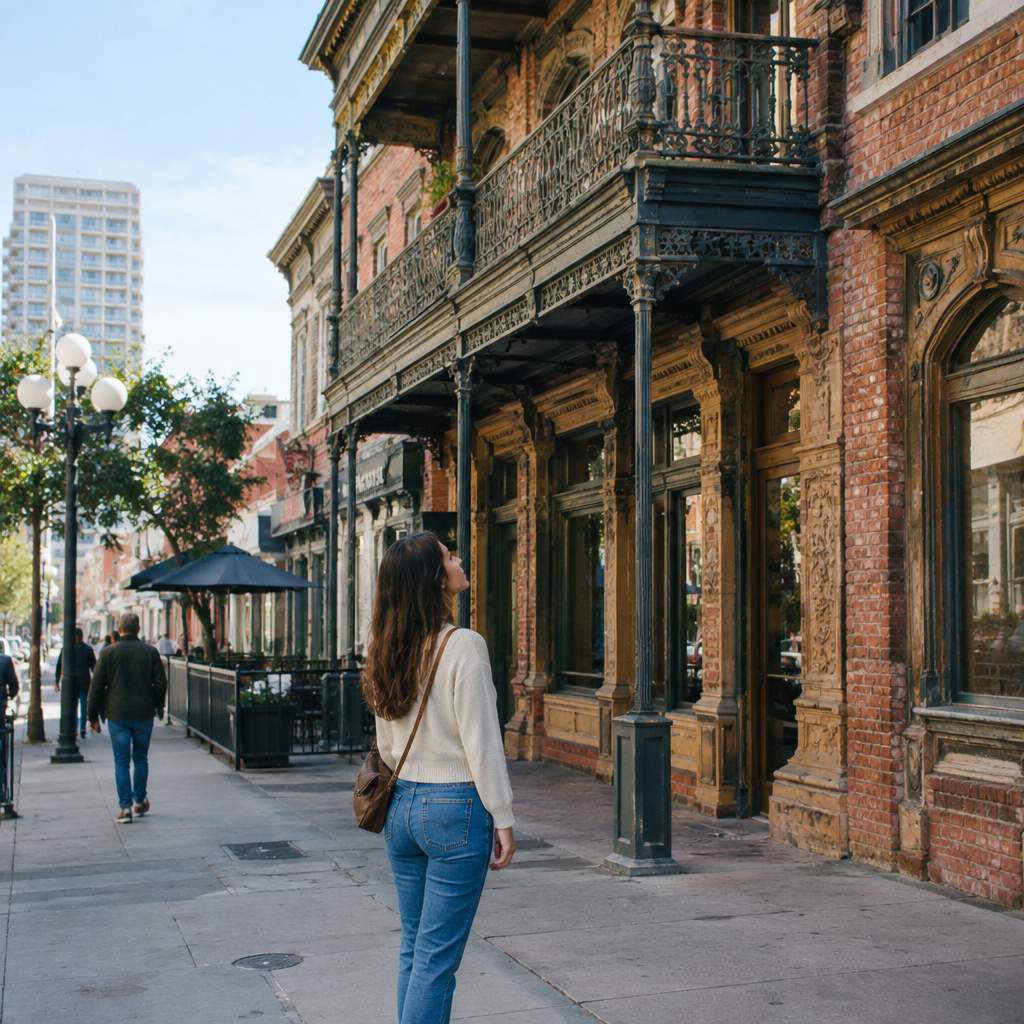
The Gaslamp Quarter is easy to read as a backdrop for dinner plans: brick facades, glowing signs, busy patios. Look a little longer, though, and the streets start telling a different story. This downtown San Diego district has been a place of ambition, reinvention, and occasional trouble for more than a century—and its buildings still carry the clues.
A self-guided walk works best at a slower pace. Pick up the details above the storefronts, where decorative cornices, arched windows, and old-fashioned lettering often survive even when the businesses below them have changed.
Read the buildings from the top down
Start around Fifth Avenue and Broadway, then wander south through the historic core. Many of the Quarter’s best-known buildings date to the late 1800s and early 1900s, when San Diego was growing fast and downtown merchants wanted their buildings to look prosperous. Brick and stone fronts, tall upper-floor windows, and ornamental metalwork gave commercial blocks a sense of permanence.
Don’t just scan the ground-floor signs. Look up for pressed-metal cornices, carved flourishes, and rows of windows that once brought daylight into offices, hotels, and meeting rooms. Some facades are more elaborate than others; that contrast is part of the fun. The district feels less like a perfectly preserved set than a working neighborhood that has kept pieces of its earlier self.
From Stingaree to Gaslamp
Before the Gaslamp became a nightlife destination, this part of downtown was known as the Stingaree. In the late 19th and early 20th centuries, it had a rough reputation, with saloons, gambling, and other businesses that city leaders tried to control. The nickname stuck in local memory, even as the neighborhood changed.
That history is more complicated than a tidy tale of a bad district becoming respectable. San Diego’s downtown grew through waves of development and decline, and the Gaslamp’s identity shifted along with it. The district’s name today nods to the gas streetlights that once illuminated its blocks, while its preserved architecture offers a visible link to the city’s early commercial boom.
For a closer look at the past, pause at the Davis-Horton House on Island Avenue, one of the city’s oldest surviving buildings. Its modest scale and domestic feel make a striking contrast with the grander commercial fronts nearby. Check current visiting hours before you go; historic sites can have limited schedules.
Make the walk your own
Give yourself an hour or two, and leave room to double back. The Gaslamp is compact, but its details reward a second glance. Try this simple route:
- Begin on Broadway. Notice how the older commercial blocks meet the newer downtown skyline.
- Walk south along Fifth Avenue. Look for decorative rooflines and upper-story windows between the restaurant signs.
- Turn onto Island Avenue. Seek out the Davis-Horton House and the quieter residential traces nearby.
- Finish with a pause. Choose a café or patio and watch the street shift from daytime errands to evening crowds.
The Gaslamp is lively now—sometimes loud, often crowded, and unmistakably urban. That present-day energy doesn’t erase its history; it gives the old facades new neighbors and new uses. For visitors staying in a downtown hostel or exploring San Diego on foot, the best souvenir may be a small discovery: a carved detail, a surviving doorway, or the realization that the block in front of you has already lived several lives.