
Balboa Park on a Budget: Gardens, Architecture, and Free Finds
Explore Balboa Park’s historic architecture, gardens, and outdoor corners without building your day around museum tickets.
3/29/2026
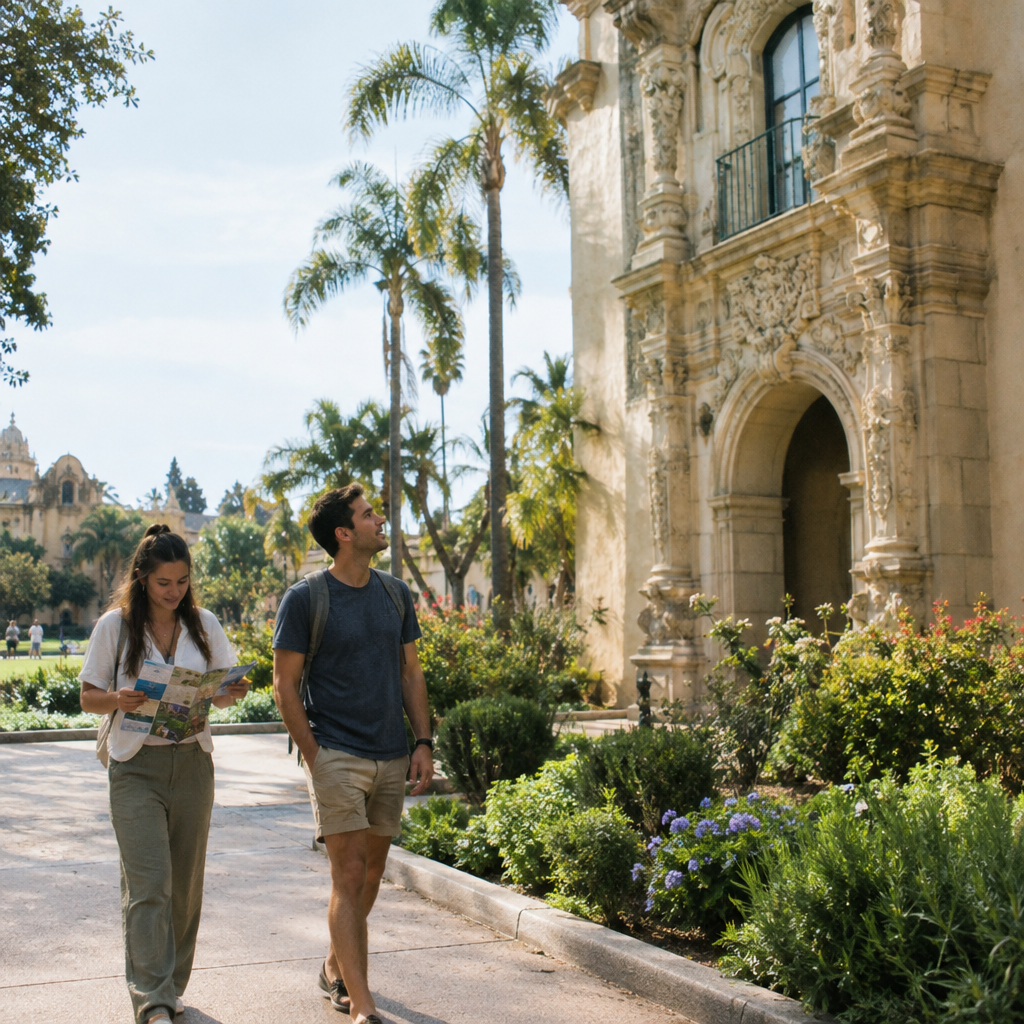
Balboa Park is easy to mistake for a museum checklist. But you don’t need to buy a ticket—or spend the day indoors—to enjoy it. The park’s best budget outing is a slow wander past ornate buildings, leafy gardens, and open-air corners where San Diego’s history and everyday life meet.
Start near the El Prado entrance and give yourself time to look up. The Spanish Colonial Revival buildings along this promenade were built for the 1915–16 Panama-California Exposition, and their carved details, tiled domes, and long arcades are part of the experience. You can stroll through the historic core for free; museum admission is separate.
A scenic route with plenty of free stops
From El Prado, walk toward the Botanical Building and Lily Pond. The building’s distinctive lath structure and the pond’s reflections make this one of the park’s most memorable photo stops. The Botanical Building has been undergoing restoration, so check the City of San Diego’s current updates before making it your main destination. Even if it’s closed, the surrounding gardens and paths are worth a look.
Continue to the Alcazar Garden, a compact, formal garden inspired by the gardens of Seville. Its tiled fountain, clipped hedges, and shaded benches offer a welcome pause without taking you far from the main route. Nearby, the Zoro Garden is a sunken space with an unusual past as a nudist colony exhibit during the 1935 California Pacific International Exposition. Today, it’s a peaceful garden—and a reminder that Balboa Park has always had a flair for the unexpected.
For a quieter stretch, head toward the Japanese Friendship Garden’s exterior paths and the park’s open lawns. The garden itself charges admission, but you can still enjoy the surrounding scenery without going inside. On a clear day, spread out on the grass with a snack and watch the mix of visitors, performers, and locals moving through the park.
Architecture is the main event
Take the Cabrillo Bridge for a change of perspective. Its graceful arches frame the park and connect the central area with the western entrance. Back on El Prado, notice the California Tower rising above the buildings; the tower is one of the park’s defining landmarks, though access to its observation deck requires a ticket and may depend on current hours.
Street performers and pop-up musicians often add a soundtrack around the central promenade, especially on busy weekends. There’s no guarantee of a show, which is part of the charm: pause when something catches your ear, then keep wandering.
Getting around without overspending
Balboa Park is large, so wear comfortable shoes and choose a few areas rather than trying to cover every path. The free Balboa Park Tram connects major spots when it’s running; check the park’s website for its current schedule and stops. Buses serve nearby entrances, while parking availability can vary—arriving earlier on weekends can save you a long search.
Bring water and a snack, and check opening hours before you go. A backpacker watching expenses can easily build a satisfying day around the architecture, gardens, and outdoor spaces alone. Balboa Park rewards the unhurried visitor: the best find may be a quiet bench, a tiled detail you nearly missed, or a few minutes under the palms with nowhere else to be.