
A Local Guide to San Diego’s Cultural Districts
Explore San Diego through the histories, murals, food, and community spaces that make each neighborhood distinct.
7/12/2026
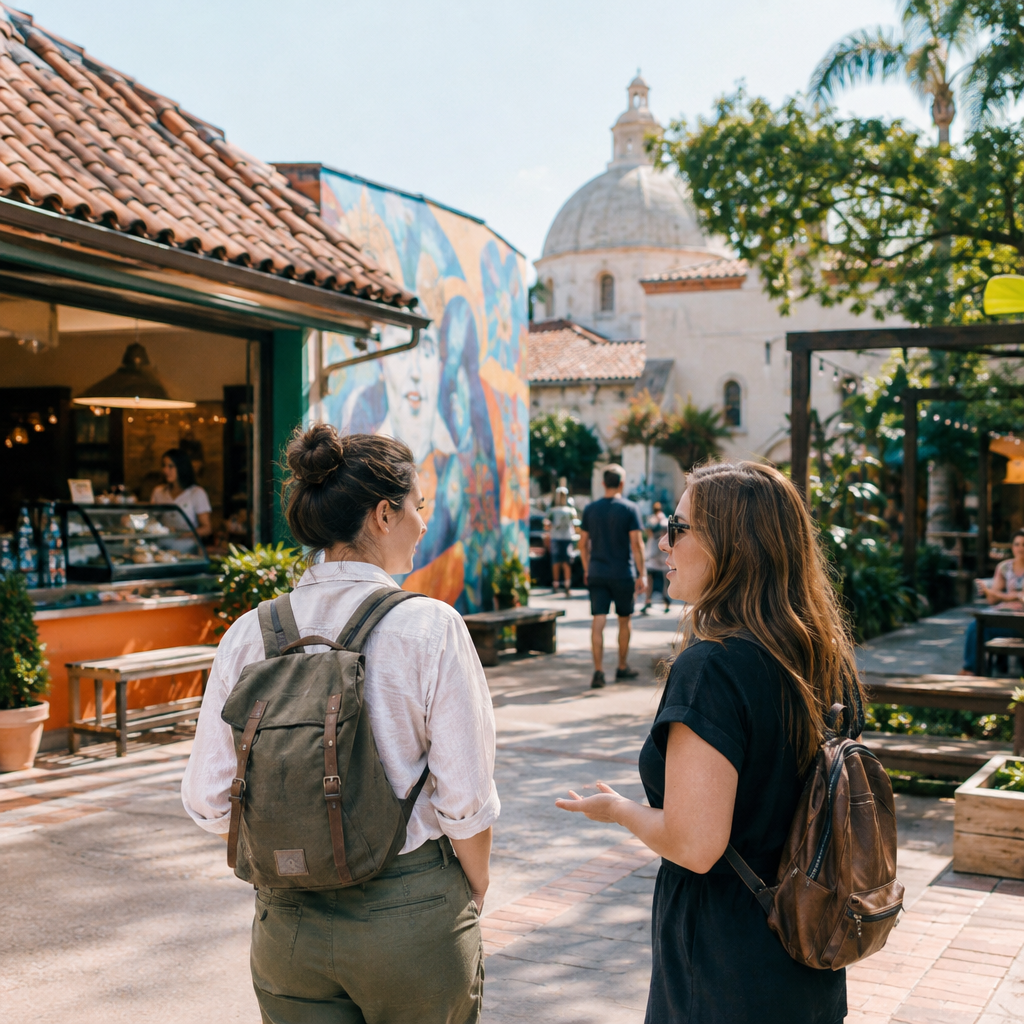
San Diego’s cultural character isn’t contained in one museum or historic square. It shows up block by block: in a family-run bakery, a mural painted for the neighbors who live nearby, or a park where generations gather after work. The best way to explore is to pick a few districts, slow down, and let each place set its own pace.
These neighborhoods are living communities, not attractions built for visitors. Go with curiosity, spend locally, and remember that a quick photo doesn’t tell the whole story.
Old Town: Start with the layers
Old Town is a useful first stop for understanding San Diego’s early history, but its tidy historic setting can make the past seem simpler than it was. Visit the preserved buildings and museums, then look for the stories of the Kumeyaay people and the Mexican and Mexican American communities whose histories are central to the region.
Give yourself time to wander beyond the busiest courtyards. The architecture, small museums, and everyday details are more rewarding when you’re not racing from one photo spot to the next. And yes, try a meal here—but don’t assume one restaurant can stand in for the city’s much broader Mexican food traditions.
Barrio Logan: Art with a point of view
Barrio Logan’s cultural heart is Chicano Park, where murals cover the concrete pillars beneath the Coronado Bridge. The paintings honor Chicano history, community pride, and resistance to displacement. They aren’t just colorful backdrops; they’re public art with a clear voice.
Walk the park, read the mural descriptions, and visit the nearby galleries or small businesses if they’re open. The neighborhood is still home to residents and working businesses, so keep sidewalks clear and ask before photographing people. For a more grounded visit, check whether a local cultural event or gallery opening is happening that day.
Little Italy: A neighborhood that keeps changing
Little Italy’s Italian roots remain part of its identity, though today the district is a mix of old family businesses, newer restaurants, studios, and public spaces. India Street is lively, but the neighborhood is worth exploring beyond dinner reservations: look for local art, historic details, and the Piazza della Famiglia, a gathering place designed for lingering.
It’s an easy area for a casual stroll, especially if you’re visiting downtown without a car. Just keep in mind that a popular dining district is also a residential neighborhood. Make room on the sidewalk and support independent shops alongside the better-known spots.
North Park: Murals, music, and independent spirit
North Park has a strong creative streak, visible in its murals, small galleries, record shops, and live-music venues. University Avenue and 30th Street make a good starting route, but the best finds are often tucked on side streets. This is a district to browse rather than check off.
Look for a neighborhood show or pop-up, then stay for a meal or coffee at a local business. The scene changes, so check current hours before heading out. A backpacker watching their budget can still make a day of it: public art and window-shopping cost nothing, and a single thoughtfully chosen stop can feel more memorable than a packed itinerary.
Choose a district, then pay attention
You don’t need to cover every neighborhood in one trip. Pick the one that speaks to your interests—history, murals, architecture, music, or food—and leave room for an unplanned conversation or detour. San Diego’s cultural districts make the most sense when you treat them not as exhibits, but as places where people are making the city’s story right now.