
Chicano Park: A Guide to Its Murals and Meaning
Explore the landmark murals, community history, and respectful ways to experience Barrio Logan’s Chicano Park.
6/14/2026
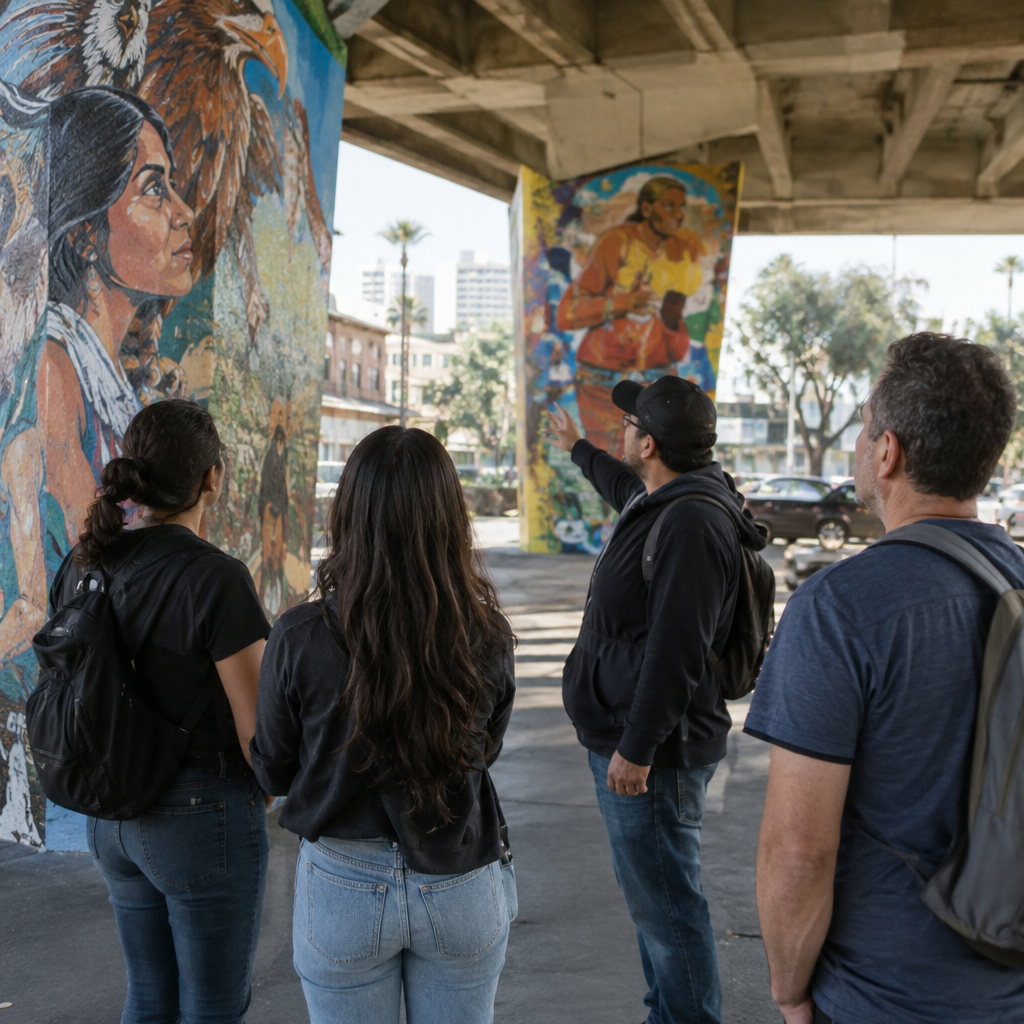
Under the freeway ramps in Barrio Logan, concrete pillars burst with color: portraits of community leaders, Indigenous symbols, scenes of resistance, and visions of a future shaped by the people who live here. Chicano Park is not a gallery dropped into a neighborhood. It is a public place won by one—and its murals make that history impossible to miss.
Give yourself time to look beyond the biggest paintings. The park’s art rewards a slower visit, especially if you arrive curious about the people and events behind the images.
A park claimed by its community
In 1970, Barrio Logan residents and activists occupied land beneath the newly built San Diego–Coronado Bridge and the I-5 interchange. The site had been promised as a park, but plans for a California Highway Patrol facility put that promise at risk. Residents held the ground until the city agreed to create a park there.
That history matters when you view the murals. Chicano Park is a landmark of the Chicano movement and a living expression of community self-determination. The paintings turn highway supports—structures associated with displacement and disruption—into vivid statements about identity, memory, and belonging.
What to look for in the murals
More than 70 murals cover the park’s pillars and retaining walls. Some honor figures such as César Chávez and Dolores Huerta; others draw on Mexican and Indigenous histories, including symbols and stories connected to the Americas before colonization. You’ll also see images of labor, migration, family, and political struggle.
There isn’t one correct route or a single mural that explains the whole park. Notice how the artists use the scale of the pillars: a face or symbol can rise several stories, while smaller details reward a closer look. Color, lettering, and repeated imagery connect works across the site. If a particular mural catches your eye, pause with it rather than trying to check off every pillar.
Tips for a thoughtful visit
- Read a little before you go. Knowing the park’s 1970 occupation gives the artwork a clearer context. On-site signs and interpretive materials can add helpful detail, too.
- Walk the park, not just the perimeter. Take in the murals from different angles, and leave room for the everyday life happening around them. This is a neighborhood park, not a staged attraction.
- Be considerate with photos. Photograph the artwork, but ask before taking close-up pictures of people. Keep pathways clear and treat the space with the same respect you would show a community gathering place.
- Check for events. Chicano Park Day, held each April, brings music, dance, food, and community celebration. It’s a memorable time to visit, though a quieter day may suit visitors who want to study the murals at their own pace.
Chicano Park sits in Barrio Logan, a short trip from downtown San Diego. You can make it an affordable stop while visiting the city, but don’t treat it as a quick photo break between attractions. Stay long enough to notice how art, history, and neighborhood life share the same ground. The murals are powerful on their own; understanding why they’re here makes them unforgettable.